
The Importance of Dustproofing and Sealing Concrete Floors
Dust accumulation on concrete floors is not merely a cosmetic problem. It can lead to several issues, such as:
- Health Concerns: Airborne dust particles can lead to respiratory problems and allergies, affecting the well-being of inhabitants or employees.
- Aesthetics: Dust accumulation can make floors appear dull, dirty, and unkempt, undermining the visual appeal of your space.
- Surface Deterioration: Over time, dust particles can abrade the surface of the concrete, causing wear and weakening the structural integrity.
- Maintenance Challenges: Dusty floors require frequent cleaning, which can be time-consuming and costly.
Benefits of Dustproofing and Sealing
Dustproofing and sealing concrete floors offer a range of benefits that contribute to the overall functionality and appearance of your space:
- Dust Prevention: Sealing creates a barrier that prevents dust particles from becoming airborne, reducing health risks and maintenance efforts.
- Enhanced Durability: Sealing strengthens the surface of the concrete, making it more resistant to wear, abrasion, and chemical damage.
- Aesthetic Enhancement: Sealed concrete floors can have a glossy finish that enhances their visual appeal, giving your space a polished and professional look.
- Ease of Maintenance: Sealed surfaces are easier to clean, requiring less frequent and less intensive maintenance.
- Longevity: Properly sealed floors can have an extended lifespan, saving you money in the long run by reducing the need for repairs and replacements.
The Step-by-Step Process
- Preparation:
- Clean the floor thoroughly to remove any existing dirt, debris, or contaminants.
- Repair any cracks, chips, or imperfections on the concrete surface.
- Choosing the Right Sealer:
- Select a sealer appropriate for your specific needs, such as acrylic, epoxy, polyurethane, or penetrating sealers. Consider factors like traffic, aesthetics, and environmental conditions.
- Application:
- Apply the sealer evenly using a roller or sprayer.
- Work in small sections to ensure even coverage and prevent the sealer from drying too quickly.
- Drying and Curing:
- Allow the sealer to dry and cure. This usually takes a few hours to a few days, depending on the type of sealer.
- Maintenance:
- Regularly clean the sealed floor using a mild, pH-neutral cleaner to preserve its appearance and longevity.
- Avoid using abrasive cleaners or tools that could damage the sealer.
Dustproofing and sealing concrete floors are crucial steps to maintain a clean, attractive, and durable surface in both residential and commercial settings. By preventing dust accumulation, enhancing aesthetics, and increasing the lifespan of your concrete floors, you’re making a worthwhile investment that pays off in terms of reduced maintenance efforts and long-term cost savings. Following the step-by-step process outlined in this guide will help you achieve a professionally sealed concrete floor that stands the test of time.
Sealing options;
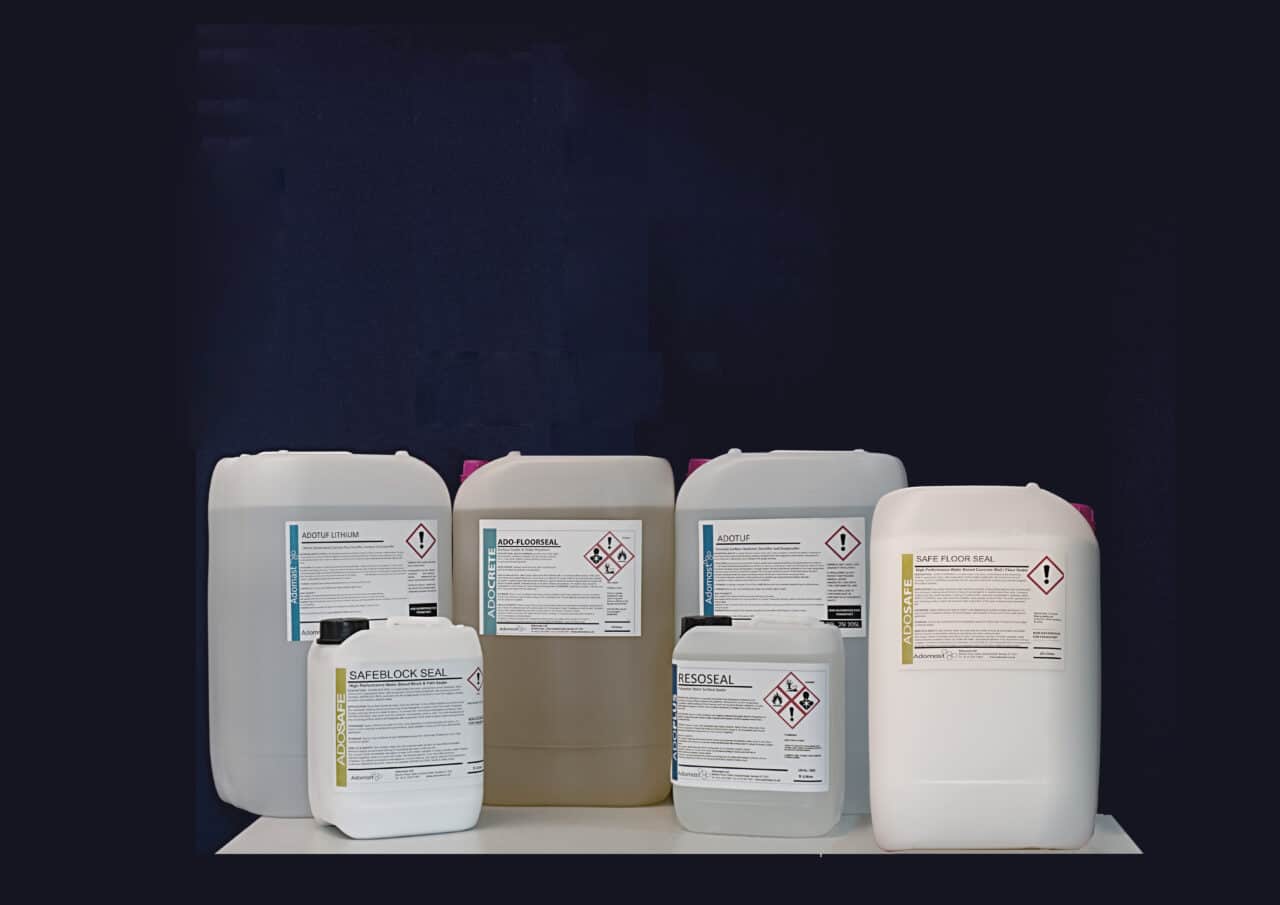
Adotuf Lithium Environmentally friendly solution of lithium silicate for polishing concrete floors.
Safeblock Seal Water based surface, blocks and paving sealer.
Safe Floor Seal Water based acrylic concrete sealer.
Ado-Floor Seal Provides a clear coating, tough and water repellent protection to exterior surfaces.
Adotuf Concrete surface hardener & Dustproofer.
Resoseal Polyurethane resin for sealing concrete floors & surfaces.
Click here to view the Adomast range of concrete sealers and dust proofers.
